
Affiliate marketing has changed dramatically over the last few years. What once looked like a simple side hustle has become a sophisticated digital business powered by data, automation, and content. As we move deeper into 2026, the industry is entering another major transformation—and the affiliates who adapt early will have a significant advantage.
Here are the most exciting upcoming trends shaping the future of affiliate marketing.
1. AI-Powered Affiliate Marketing Will Become the Norm
Artificial intelligence is no longer a futuristic concept. Modern affiliates are already using AI to generate blog posts, ad copy, email sequences, landing pages, and even video scripts. In the near future, AI tools will help marketers identify profitable offers, predict conversion potential, and optimize campaigns automatically.
The biggest benefit is speed. Affiliates who once needed days to launch a campaign can now test ideas in hours. This means the competitive edge will shift from “who works hardest” to who tests and learns fastest.
2. Short-Form Video Will Dominate Traffic Generation
Platforms such as YouTube Shorts, Instagram Reels, TikTok, and Facebook Reels continue to capture massive attention. Consumers increasingly prefer quick, visual content over long articles.
Successful affiliates are creating:
-
- 30-second product demonstrations
-
- Quick tutorials
-
- Before-and-after transformations
-
- “3 tips” educational videos
-
- Honest product reviews
Short-form video is becoming one of the cheapest and fastest ways to build trust and drive affiliate clicks.
3. First-Party Data Will Become Extremely Valuable
Privacy changes and the decline of third-party cookies are pushing marketers to build their own audiences. Instead of relying entirely on social platforms, smart affiliates are focusing on:
-
- Email lists
-
- Telegram communities
-
- WhatsApp channels
-
- SMS subscribers
-
- Private memberships
Owning your audience means you can promote offers repeatedly without paying for traffic every time.
4. CPA Marketing Will Expand Beyond Traditional Offers
CPA (Cost Per Action) marketing is evolving rapidly. New categories such as fintech apps, AI tools, software trials, subscription services, and online education are offering attractive CPA payouts.
Many advertisers prefer paying for qualified leads or free-trial signups rather than completed sales, creating more opportunities for affiliates with smaller budgets.
5. Trust-Based Marketing Will Outperform Hype
Consumers are becoming more skeptical of unrealistic income claims and flashy screenshots. The affiliates winning today are those who publish transparent content, show real experiences, and openly discuss both pros and cons.
Expect to see more:
-
- Case studies
-
- Screen recordings
-
- Live demonstrations
-
- Revenue breakdowns
-
- Authentic testimonials
Trust is becoming a stronger conversion factor than aggressive sales copy.
6. Micro-Niches Will Beat Broad Niches
The era of “general make money online” websites is fading. Search engines and social algorithms increasingly reward specialized expertise.
A micro-niche such as “AI tools for affiliate marketers” or “budget-friendly CPA campaigns for beginners” can outperform a broad marketing site because it attracts a more targeted audience with stronger buying intent.
7. Automation Will Reduce Operational Work
Affiliates are beginning to automate repetitive tasks such as link management, tracking, reporting, email follow-up, and campaign setup. This allows solo marketers to operate more like small agencies.
The future affiliate business will likely look less like a one-person hustle and more like an automated digital system.
8. Community-Led Affiliate Brands Will Rise
People increasingly buy from creators they feel connected to. Affiliates who build active communities around a niche—through Telegram groups, Discord servers, or email newsletters—can generate consistent sales without constantly chasing new traffic.
Community creates loyalty, repeat clicks, and long-term customer relationships.
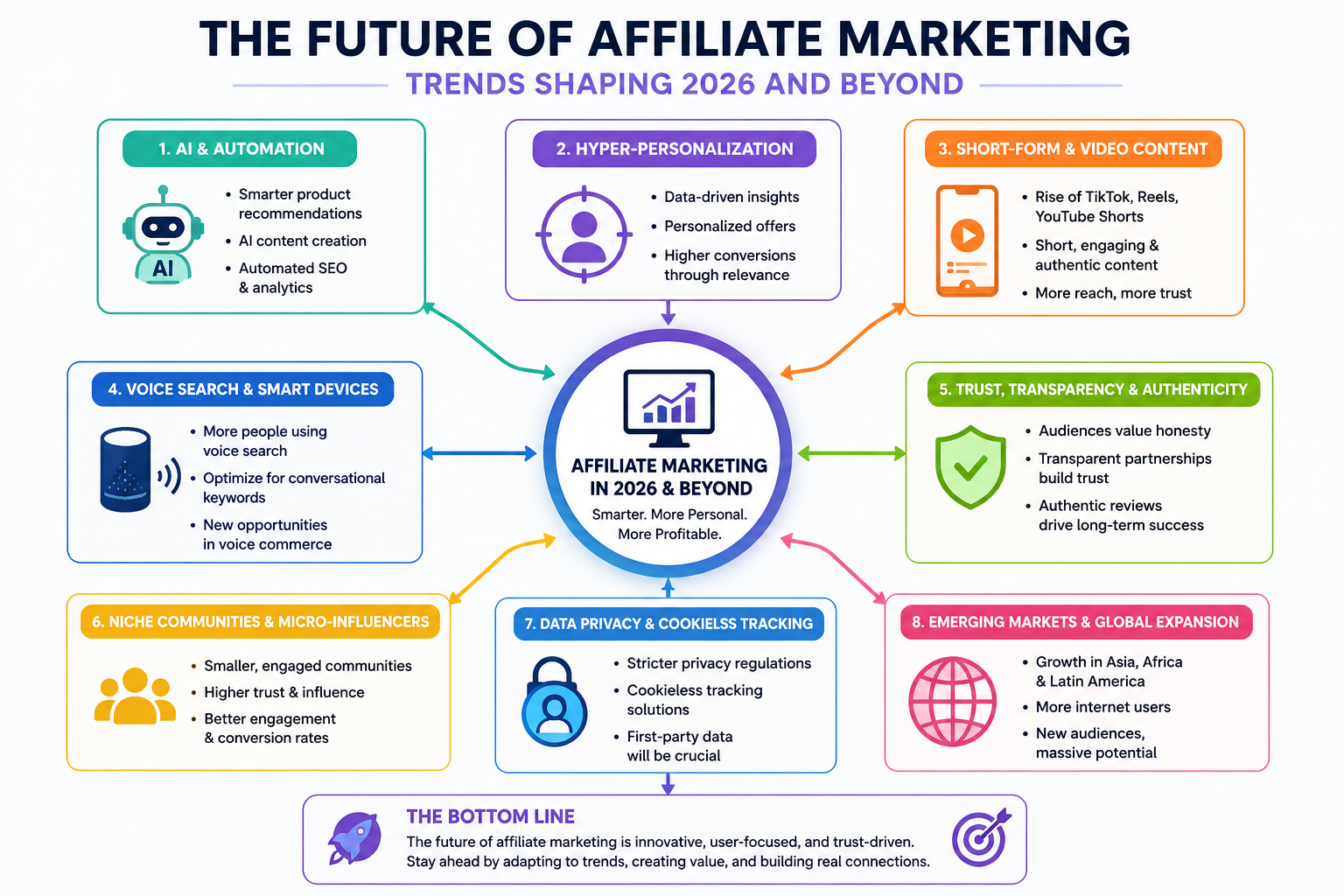
Affiliate marketing is not disappearing; it is evolving. The next generation of successful affiliates will combine AI, short-form content, owned audiences, automation, and authentic trust-building.
The opportunity is still enormous, especially for marketers willing to adapt early. Instead of asking, “Is affiliate marketing still worth it?” the better question is:
“Am I building the skills that affiliate marketing will reward in the next five years?”
Those who embrace these trends now will be far better positioned to thrive in the rapidly changing digital economy.