
A few years ago, starting an online business often meant building a website, hiring designers, learning coding, and spending thousands of dollars before making a single sale. Today, the landscape looks completely different. A laptop, an internet connection, and the right marketing strategy can be enough to build a real income stream.
This is why online marketing, CPA marketing, and affiliate marketing have become some of the most exciting opportunities in the digital economy. They allow ordinary people—students, employees, freelancers, and entrepreneurs—to promote products and services online and earn commissions without creating their own products.
Let’s explore why these three areas are attracting so much attention and how they fit together.
Online Marketing: The Foundation of Everything
Online marketing is the broadest category. It includes every method used to attract attention and generate sales through the internet, such as:
- Search engine optimization (SEO)
- Social media marketing
- Email marketing
- Paid advertising
- Content marketing
- Video marketing
- Influencer marketing
Think of online marketing as the engine that drives digital business growth. Whether a company sells software, clothing, courses, or financial services, it needs online marketing to reach customers.
What makes online marketing so powerful is its measurability. Unlike traditional advertising, you can track clicks, leads, conversions, and revenue in real time. A marketer can launch a campaign in the morning and know by evening which ad, keyword, or video performed best.
This data-driven nature is one reason digital marketing continues to grow rapidly worldwide.
Affiliate Marketing: Earn by Recommending Products
Affiliate marketing is one of the easiest entry points into online business. The concept is simple:
- Join an affiliate program.
- Get a unique referral link.
- Promote a product or service.
- Earn a commission when someone buys through your link.
You don’t handle inventory, shipping, customer support, or product development. Your main job is connecting buyers with products that solve their problems.
Successful affiliate marketers often focus on a niche such as fitness, finance, software, travel, or education. They create helpful content—blog posts, YouTube videos, reviews, tutorials, or social media posts—that attracts people already interested in that topic.
For example, a marketer who reviews productivity software can earn recurring commissions every month when viewers subscribe through their affiliate link. Over time, these commissions can compound into a significant income stream.
The biggest mistake beginners make is promoting random products. The best affiliate marketers build trust first and recommend products they genuinely believe will help their audience.
CPA Marketing: Get Paid for Actions, Not Just Sales
CPA stands for Cost Per Action. In CPA marketing, you can earn money when a visitor completes a specific action, such as:
- Submitting an email address
- Filling out a form
- Installing an app
- Signing up for a free trial
- Requesting a quote
Notice that a purchase is not always required. This makes CPA marketing attractive because conversions can happen more easily than sales.
Imagine promoting a free budgeting app. If someone installs the app through your link, you may receive a commission even if the user never pays for the app. Because the barrier is lower, CPA campaigns can often generate higher conversion rates.
CPA marketing is especially popular among marketers who use paid traffic sources such as Facebook Ads, Google Ads, native ads, or push notifications. The challenge is managing advertising costs carefully so that commissions exceed ad spend.
How These Three Models Work Together
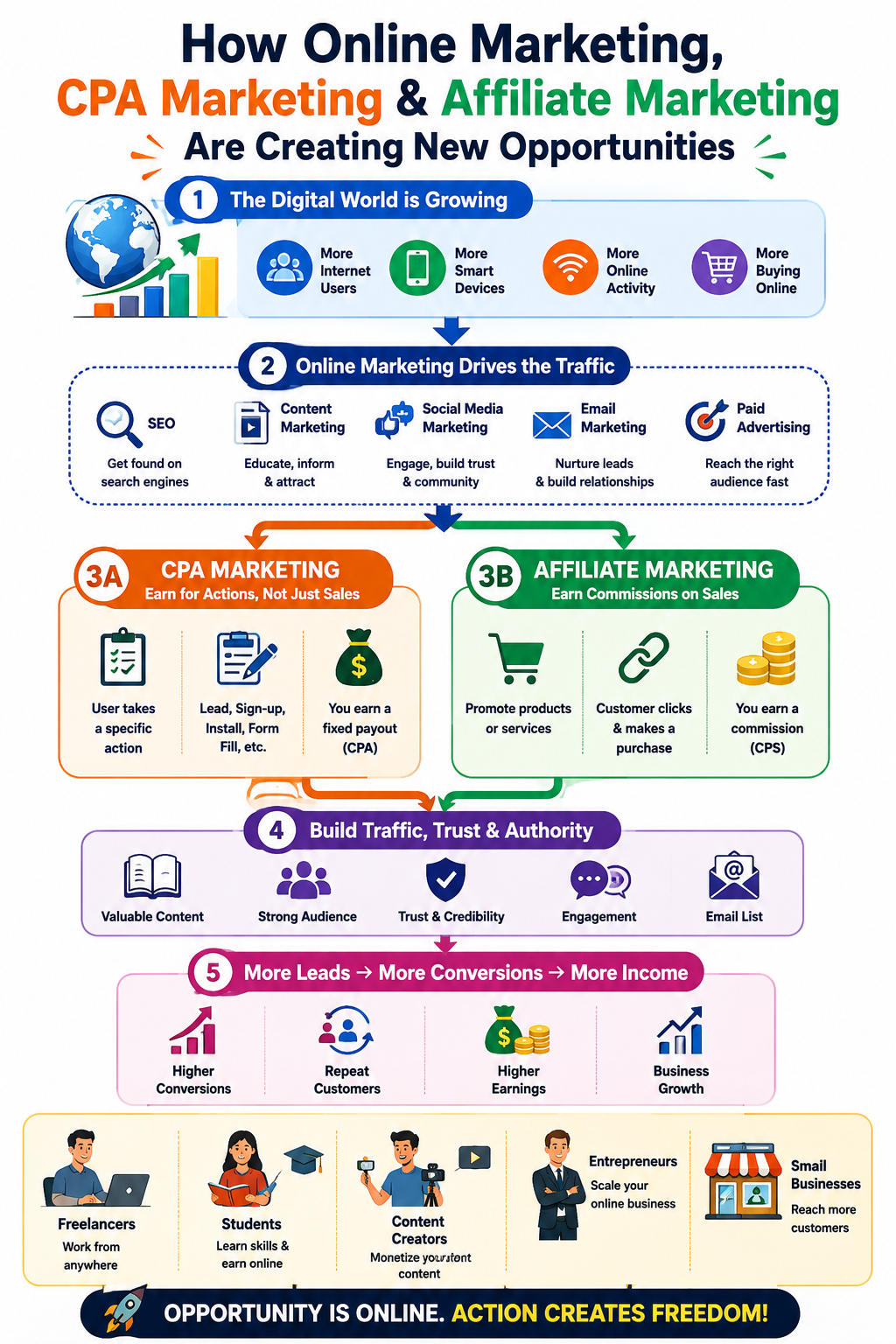
Many people think online marketing, affiliate marketing, and CPA marketing are separate industries, but they are actually closely connected.
- Online marketing provides the traffic and audience.
- Affiliate marketing monetizes that audience through product recommendations.
- CPA marketing monetizes traffic through specific actions and lead generation.
A skilled digital marketer might use SEO to attract visitors, collect email subscribers through a CPA offer, and later promote affiliate products to that same audience. The real power comes from combining the models rather than choosing only one.
The Biggest Trend: AI and Automation
One of the most important changes in 2026 is the rise of AI-powered marketing tools. Artificial intelligence can now help marketers:
- Generate ad copy
- Create landing pages
- Write email sequences
- Produce social media content
- Analyze campaign performance
- Suggest profitable offers
For small-budget marketers, AI can dramatically reduce the time and cost required to launch campaigns. Instead of spending days creating assets manually, marketers can test ideas in hours.
However, AI is not a substitute for strategy. Understanding your audience, selecting the right offers, and creating genuine value remain the factors that determine long-term success.
A Realistic Path for Beginners
If you are just starting, focus on these steps:
- Choose one niche you enjoy.
- Learn one traffic source deeply.
- Create helpful content consistently.
- Promote one relevant affiliate or CPA offer.
- Track results and improve weekly.
Avoid the temptation to chase every new trend. Consistency beats complexity.
Online marketing is no longer reserved for large companies with massive budgets. Affiliate marketing and CPA marketing have opened the door for individuals to participate in the digital economy with relatively low startup costs.
The opportunity is real, but it rewards people who treat it like a business rather than a lottery ticket. Build trust, provide value, learn from data, and keep testing. The marketers who succeed are not usually the ones who find a secret trick—they are the ones who keep launching, learning, and improving.
In a world where more commerce happens online every year, understanding these three disciplines may be one of the most valuable skills you can develop for the future.